
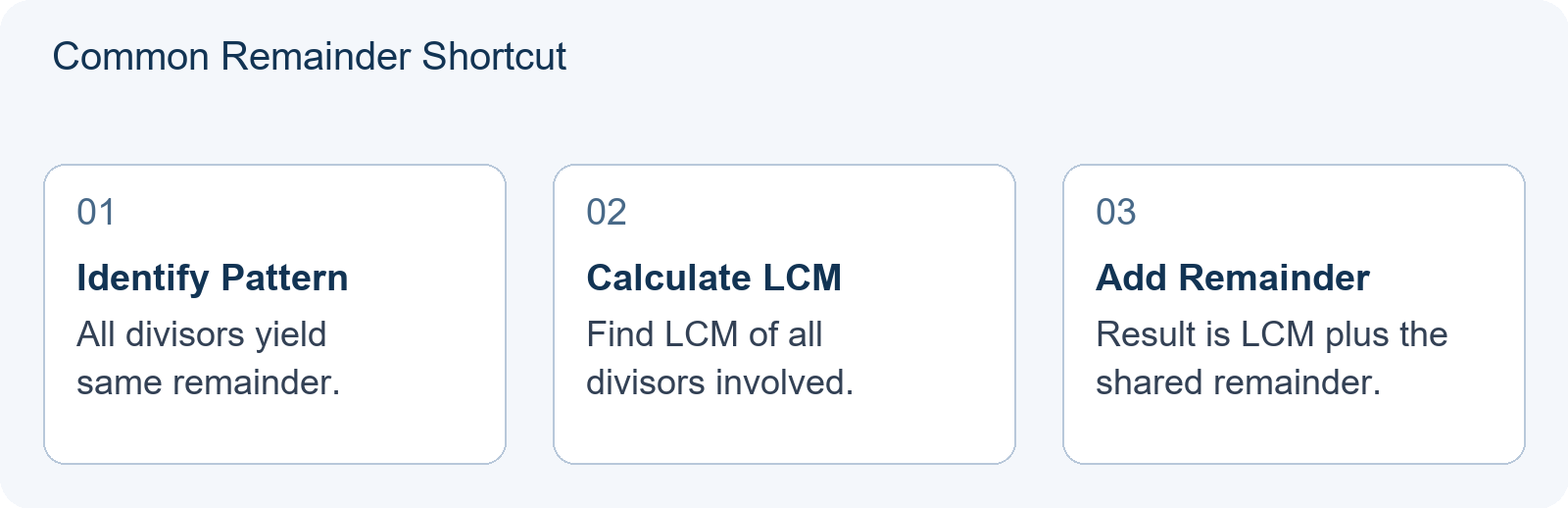
AMO Remainder Word Problems: Finding the Smallest Number That Fits
A focused guide on solving AMO-style remainder problems by identifying constraints and testing minimal values, featuring worked examples and common pitfalls. Read
Plain-English explainers and preparation tips for the American Mathematics Olympiad — for Grade 2–12 families.
A focused guide on solving AMO-style remainder problems by identifying constraints and testing minimal values, featuring worked examples and common pitfalls. Read

Understanding your AMO results helps you choose the right next step. Learn how AMO fits into the SIMCC family and select targeted preparation resources for future competitions. Read
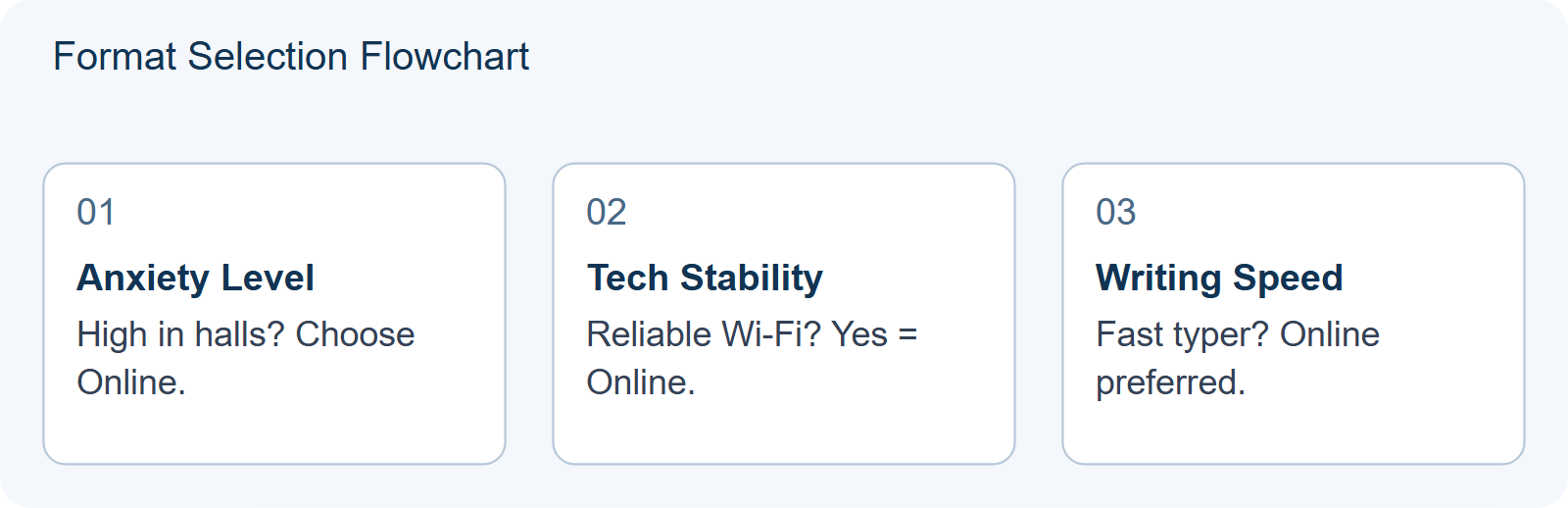
Deciding between AMO online vs paper formats? We compare environment control, tech risks, and preparation strategies to help you choose the best fit for your child’s testing style. Read
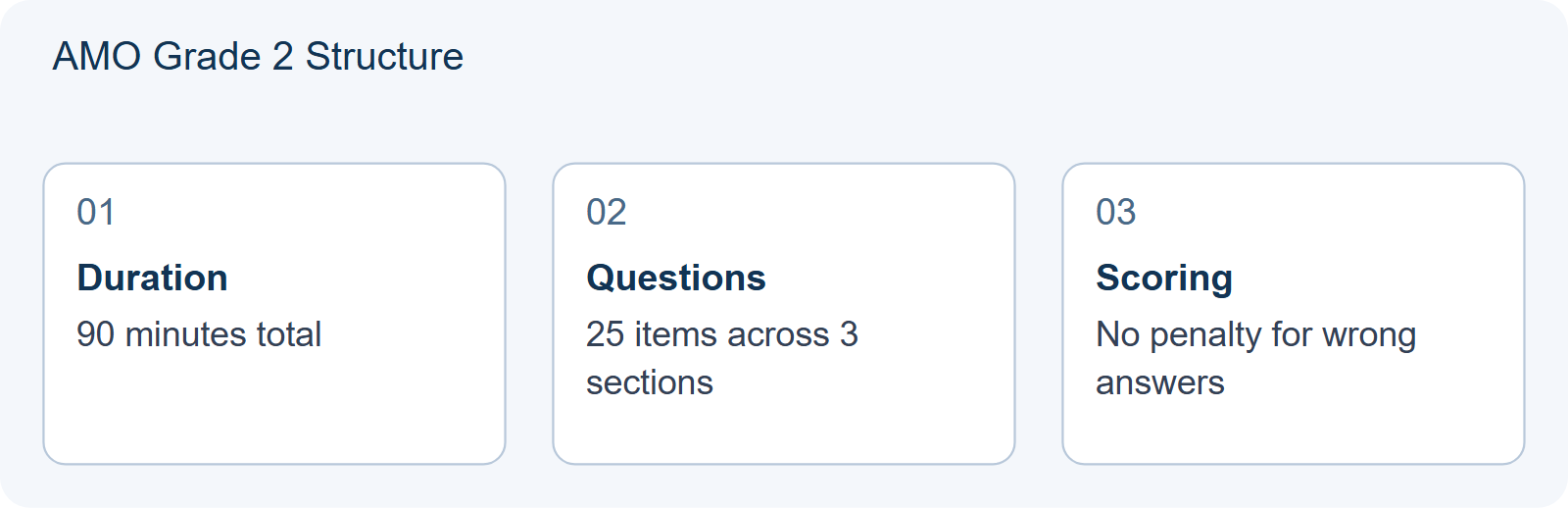
A practical guide for parents of Grade 2 students entering the American Mathematics Olympiad. Understand the format, avoid common pitfalls, and prepare effectively without burnout. Read
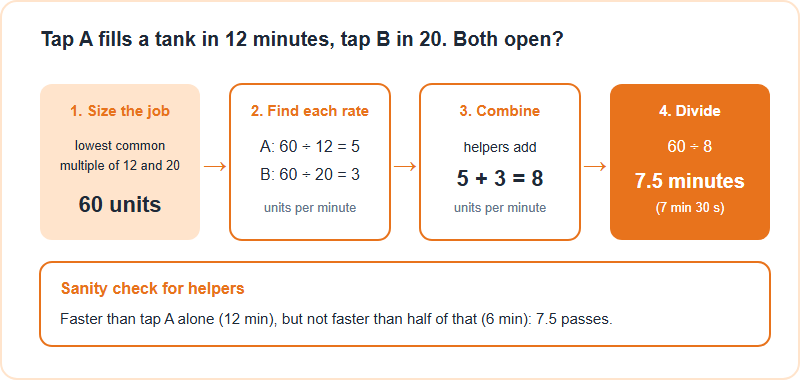
Working together, taps and leaks, taking turns: why times never add, and how sizing the whole job as a common multiple turns work-rate problems into whole-number arithmetic. Read
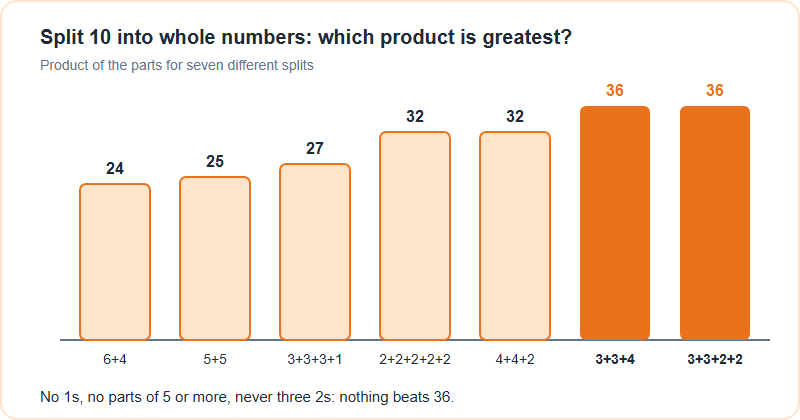
Greatest-possible and least-possible questions have two halves: an example that reaches the value and a reason nothing beats it. The bound-and-build method, worked through. Read
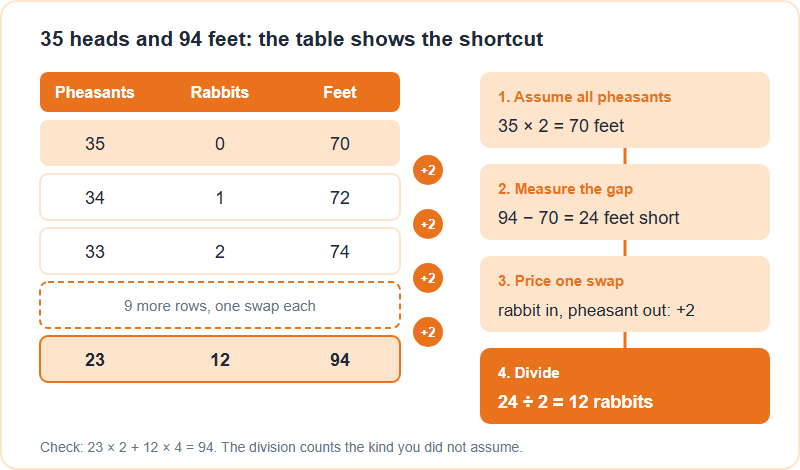
Heads and legs, two ticket prices, excess and shortage: how the assumption method solves two-kinds word problems with arithmetic alone, and where students lose the marks. Read
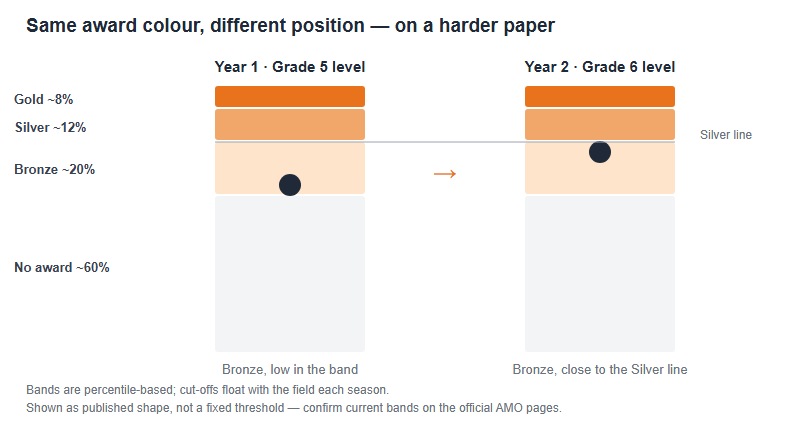
Move up a level and the field ages with you. Awards are percentile bands with floating cut-offs, so real improvement can still return the same medal – what to judge instead. Read
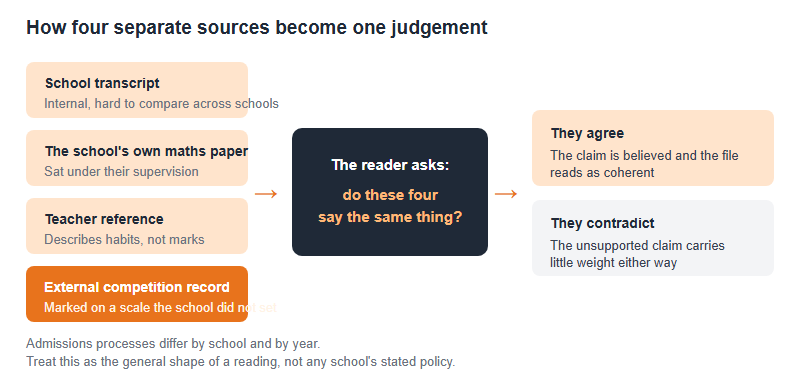
An AMO award is a claim an admissions reader cross-checks against the transcript, the school’s own maths paper and the interview. How to record it so it survives that check. Read