
Choosing the right test format is a critical decision for parents preparing their children for the American Mathematics Olympiad (AMO). The AMO online vs paper debate often centers on comfort, technical reliability, and environmental control. While both formats assess the same mathematical reasoning skills across Grades 2–12, the experience differs significantly. This guide helps you evaluate which format aligns with your child’s strengths.
Understanding the Core Differences
The AMO contest typically consists of 25 questions over 90 minutes, divided into multiple-choice and open-response sections. Whether taken online or on paper, the content remains identical. However, the delivery method impacts how students interact with problems.
| Feature | Online Format | Paper Format |
|---|---|---|
| Environment | Home or controlled center; customizable lighting/setup. | School or exam hall; standardized conditions. |
| Tech Risks | Internet stability, device battery, browser compatibility. | Minimal; relies on physical materials only. |
| Scratch Work | Digital notes or separate physical paper (if allowed). | Directly on provided answer sheets or scratch paper. |
| Navigation | Click-based; potential for accidental skips. | Physical page-turning; tactile feedback. |
When to Choose the Online Format
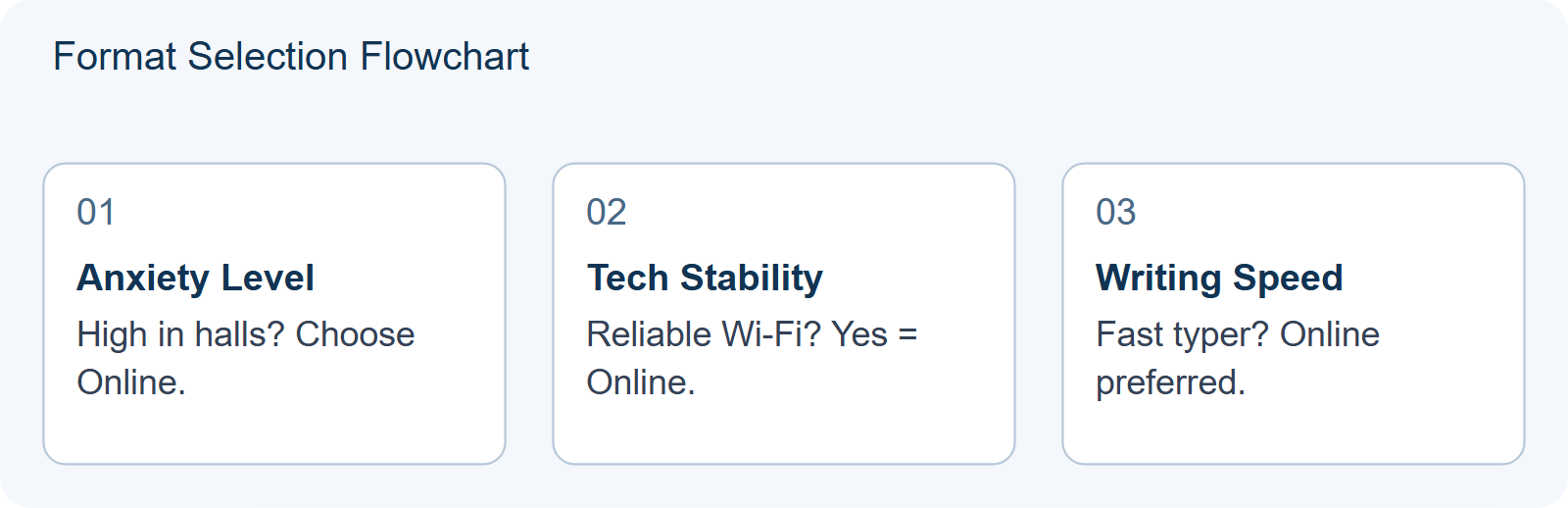
The online option is ideal for students who thrive in familiar environments. If your child experiences anxiety in large, unfamiliar halls, taking the test at home can reduce stress. Additionally, students who type quickly or prefer digital interfaces may find navigating questions more intuitive. However, this requires rigorous technical preparation. You must ensure a stable internet connection and a reliable device. Practice sessions should mimic the actual interface to prevent confusion during the real test.
For families considering this route, check our guide on AMO Work and Rate Problems to see how digital tools can aid in visualizing complex word problems. The ability to zoom in on diagrams or rearrange tabs can be an advantage if the platform supports it.
When to Choose the Paper Format
Paper tests offer a distraction-free environment. There are no pop-ups, notifications, or connectivity issues. For younger students (Grades 2–4), the tactile experience of writing numbers and drawing shapes on paper often feels more natural than clicking boxes. Many students also find it easier to manage time when they can physically mark progress on a sheet.
If your child struggles with focus or gets overwhelmed by screen glare, the paper format provides a calm, structured setting. Schools hosting these exams usually provide standard desks and lighting, ensuring fairness. To prepare for the rigors of handwritten solutions, review our tips on The Assumption Method for AMO Word Problems, which emphasizes clear, step-by-step logical flow that translates well to paper.
Preparation Strategies for Both Formats
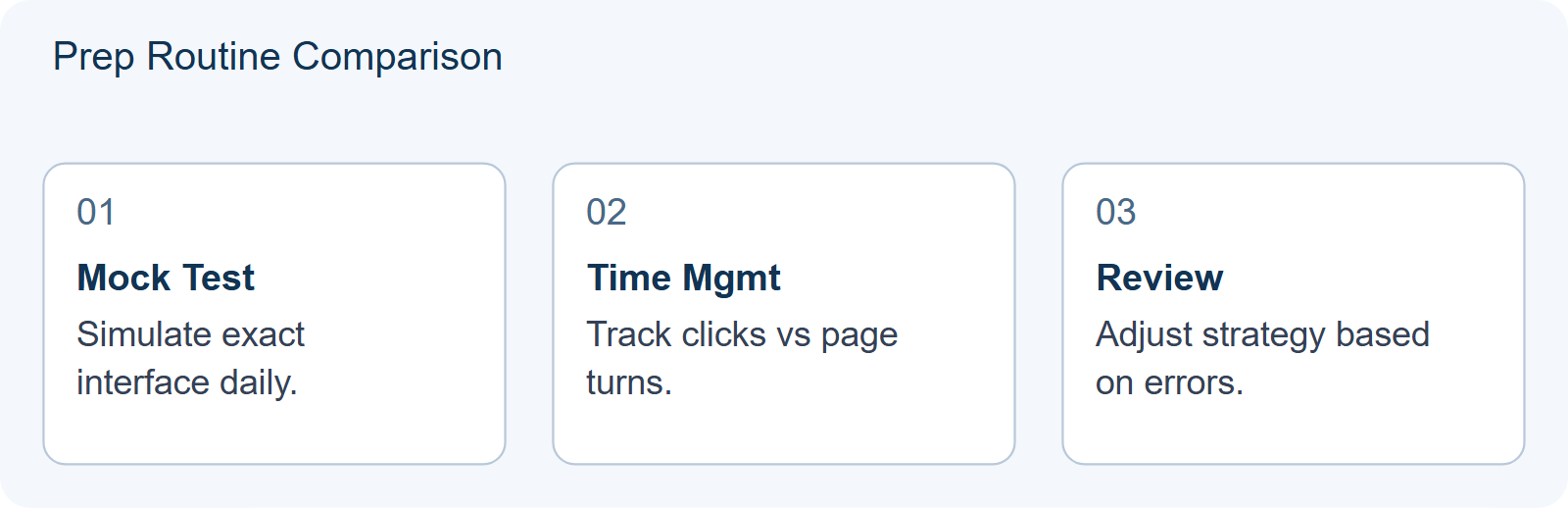
Regardless of the chosen format, consistent practice is key. Students should simulate test conditions regularly. For online prep, use mock platforms that replicate the AMO interface. For paper prep, use past papers under timed conditions without digital aids.
A common mistake is neglecting the transition between formats. A student comfortable with paper might panic if forced online due to unforeseen circumstances. Therefore, we recommend trying both formats during practice runs. This flexibility ensures your child can adapt to any situation. Our article on Prepping With the Wrong Book highlights how choosing the right resources complements format-specific training.
Technical Checklist for Online Tests
- Device: Ensure the computer/tablet is charged and has sufficient RAM.
- Connection: Use a wired Ethernet connection if possible for stability.
- Browser: Update to the latest version recommended by the test provider.
- Backup: Have a secondary device ready in case of hardware failure.
Final Decision Factors
There is no universally “better” format. The choice depends on your child’s personality and technical setup. Consider their comfort level with screens, their need for a quiet environment, and their handwriting speed versus typing speed. Discuss these factors openly with your child before registering.
Remember, the goal is to showcase mathematical thinking, not technical prowess. By selecting the format that minimizes external stressors, you allow your child to perform at their best. Always verify current registration options and specific venue availability through official channels closer to the test date, as policies may evolve.
Illustrative Decision Scenario: The “Glitch-Anxious” vs. “Tactile-Thinker” Dilemma
To help you apply the advice above, consider a hypothetical scenario involving two students with distinct preparation profiles. This example is illustrative only and does not represent any specific real-world student or official rule.
Student A (The Glitch-Anxious Online Candidate): Leo, a Grade 6 student, has strong digital literacy but high anxiety regarding technical failures. During practice, he consistently loses focus when his Wi-Fi fluctuates, even briefly. He prefers solving problems by typing notes into a digital document because it allows him to copy-paste complex equations without rewriting them. However, during a recent mock online test, a browser crash caused him to lose ten minutes of work, leading to panic and a poor score despite knowing the math.
Student B (The Tactile-Thinker Paper Candidate): Maya, also in Grade 6, struggles with screen glare and finds clicking through multiple-choice options tedious. She excels at drawing geometric diagrams on paper to visualize spatial relationships. In her home environment, she is easily distracted by household noise and notifications from other devices. When she practiced on paper in a quiet library setting, her accuracy improved significantly because she could physically cross out wrong answers and mark up diagrams directly on the question sheet.
The Decision Process:
For Leo, the core issue is not his math ability but his vulnerability to technical instability. While the online format offers convenience, his history of panic during glitches suggests that the risk outweighs the benefit. If he chooses online, he must invest heavily in redundant internet connections and backup devices, which adds stress rather than reducing it. Conversely, if he switches to paper, he loses his typing efficiency but gains environmental control. He can bring his own preferred pen and paper, eliminating the fear of a system crash. His decision should lean toward Paper, provided he practices handwriting speed to ensure he can complete open-response sections within the time limit.
For Maya, the distraction factor is critical. Her home environment is noisy, making the online format risky unless she can secure a silent room. However, her strength lies in tactile engagement—drawing and marking up papers. If she takes the test online, she may struggle to replicate this workflow efficiently, potentially slowing down her problem-solving process. Therefore, her decision should lean toward Paper as well, specifically choosing a venue where she feels comfortable and focused. Alternatively, if she must take it online due to logistics, she needs to simulate a distraction-free zone rigorously before committing.
Reusable Self-Check for Parents:
Use this table to evaluate your child’s specific situation against these hypothetical profiles:
| Diagnostic Question | Leans Toward Online | Leans Toward Paper |
|---|---|---|
| How does your child react to minor tech interruptions? | Remains calm; has backup plans. | Becomes anxious or loses focus. |
| What is their primary method for scratch work? | Digital notes; fast typist. | Drawing diagrams; heavy writing. |
| Can they create a silent, controlled environment at home? | Yes; minimal distractions. | No; frequent interruptions. |
This framework helps move beyond general preferences to concrete risk assessment. Remember, the goal is to minimize variables that distract from mathematical reasoning. By identifying whether technical reliability or environmental control is the bigger threat, you can make a more informed choice tailored to your child’s unique cognitive style.
Frequently Asked Questions
Can I switch from online to paper after registering?
Switching formats usually depends on the specific registration window and venue capacity. Check with your authorized registration partner immediately after signing up, as changes may not be permitted close to the test date.
Is the scoring different for online vs paper?
No, the scoring criteria are identical. Both formats follow the same rubric for multiple-choice accuracy and open-response completeness. The medium does not affect point allocation.
What happens if my internet fails during the online test?
Most online platforms have auto-save features. If disconnected, reconnect immediately. Contact the support team via the provided channel. Policies vary, so having a backup plan is essential.